
Compact vs Grid-Scale Power Systems: Why Deployment Matters


Discussions about advanced energy technologies often focus on large, centralized systems designed to feed national grids. These grid-scale projects are optimized for maximum output, long development timelines, and integration with existing transmission infrastructure.
While this approach remains essential for many applications, it does not address every energy need.
A growing share of demand comes from users who require power where it is consumed, not where the grid happens to reach. For these applications, deployment characteristics matter as much as generation capacity.
Distributed and on-site energy systems are designed around different constraints. Instead of prioritizing gigawatt-scale output, they focus on delivering tens of megawatts directly at the point of use. Size, modularity, installation speed, and operational autonomy become central design considerations.
Compact power systems reflect this shift. By emphasizing modular architectures and repeatable manufacturing, they enable incremental deployment and faster iteration cycles. This approach supports use cases where waiting a decade for grid upgrades or large, centralized infrastructure projects is not viable.
Mobility further sharpens the distinction. Power systems intended for ships must operate safely in limited space, tolerate motion and environmental stress, and support long-duration missions. These requirements favor compact, self-contained systems optimized for reliability and endurance rather than centralized scale.
Defense and Strategic Installations
Defense applications make the deployment gap between grid-scale and distributed systems particularly clear.
Military installations, forward operating bases, and strategic facilities often operate in environments where grid dependence introduces operational risk. Vulnerability to outages, fuel supply chains, and centralized control points is increasingly viewed as a liability rather than an acceptable tradeoff.
As a result, defense planners have placed growing emphasis on on-site, resilient power systems that can operate independently, scale modularly, and support mission-critical loads without reliance on external infrastructure. Reliability, autonomy, and speed of deployment matter more than maximizing nameplate capacity.
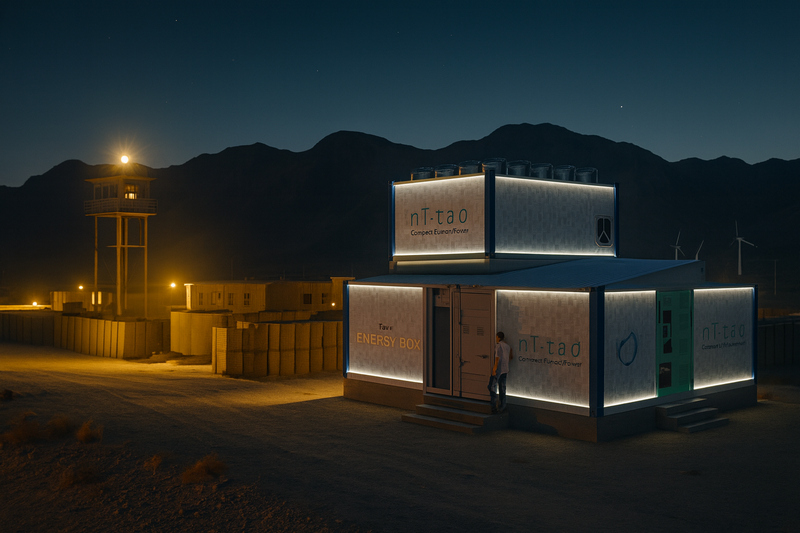
In the United States, the United States Department of War has explicitly identified energy resilience as a strategic priority. Programs and initiatives across the services increasingly focus on compact, on-site power solutions for bases, remote installations, and expeditionary environments, reflecting a broader shift away from centralized energy assumptions.
These requirements closely mirror those of other deployment-constrained users: ships, remote industry, and off-grid infrastructure. In all cases, power systems must be designed around where and how energy is used, not around the convenience of grid connection.
As advanced energy technologies mature, the distinction between grid-scale and distributed systems will become increasingly important. Success will depend not only on the ability to generate energy, but on the ability to deploy power systems that match real operational needs.
A deployment-first perspective reframes the energy conversation. Instead of asking how much power a system can produce under ideal conditions, the relevant question becomes where, how, and for whom that power can be delivered.
nT-Tao’s approach reflects this perspective, focusing on distributed baseload power systems designed for on-site operation, both in fixed installations and aboard ships, where continuous, reliable energy is required directly at the point of demand.


